バイクワークショップ合成写真
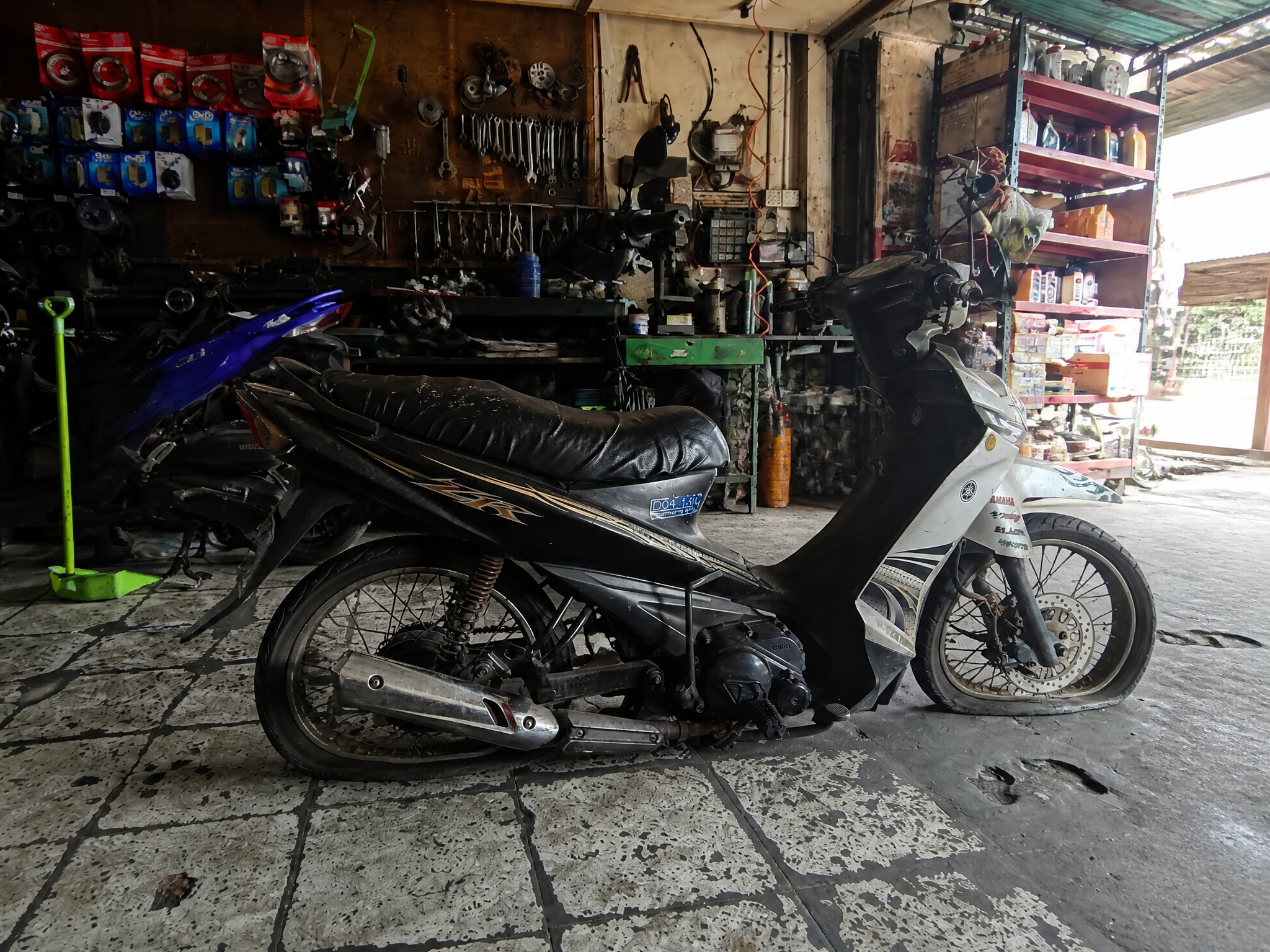
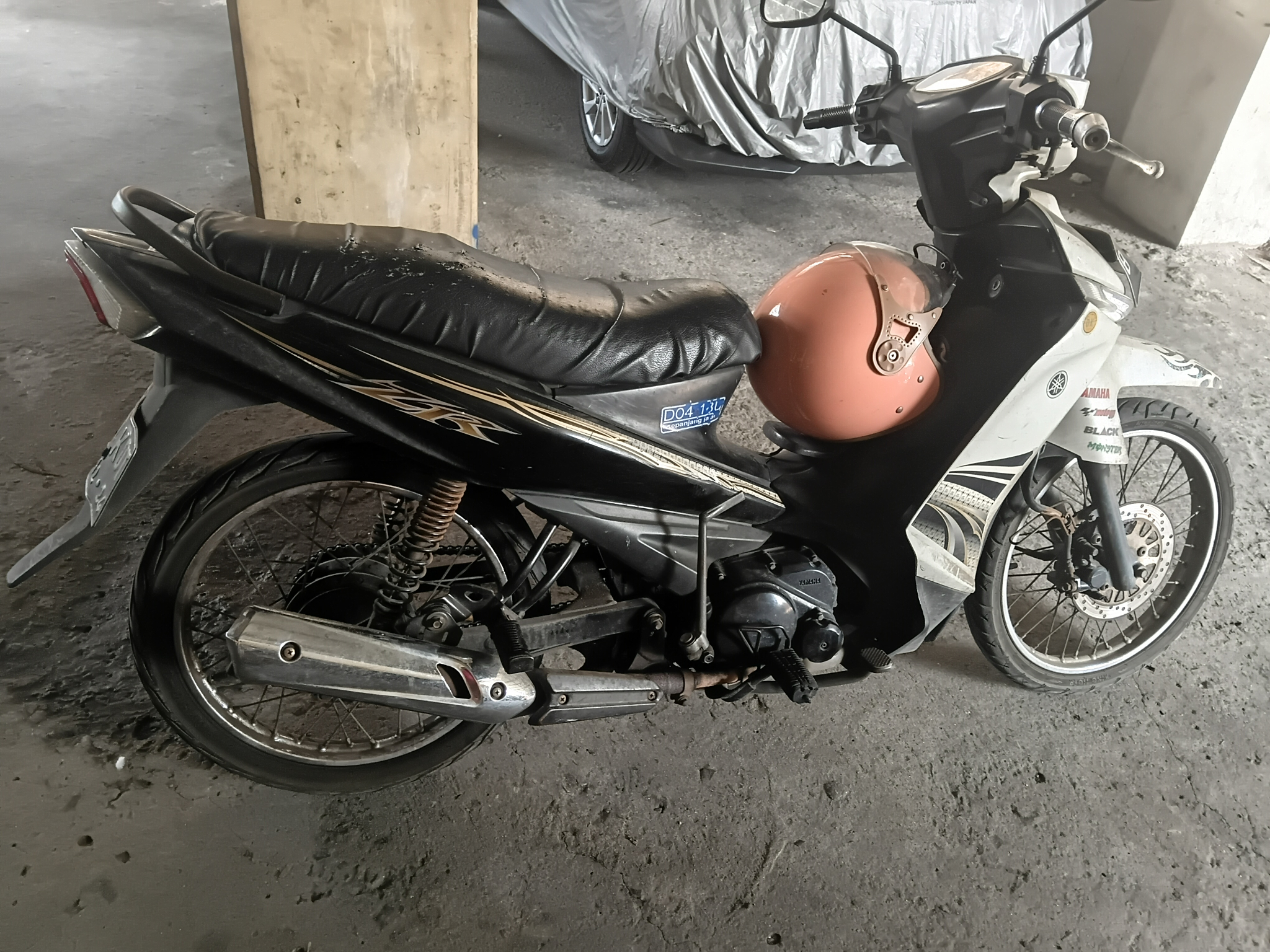
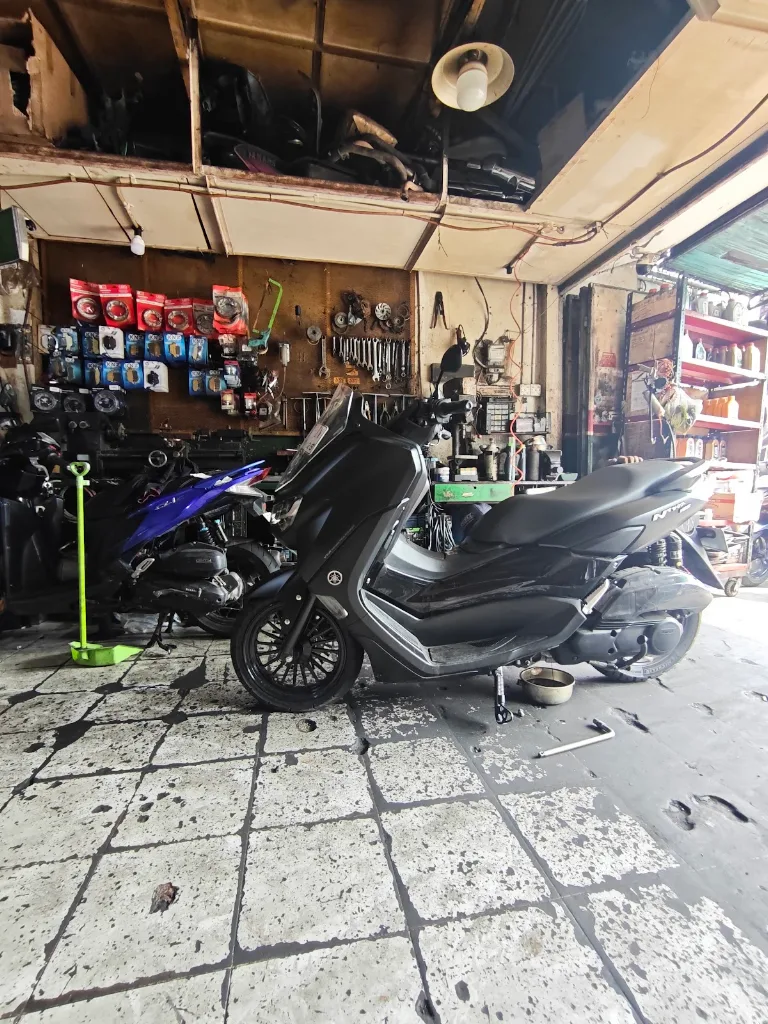
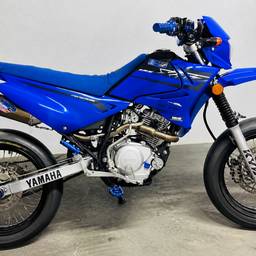
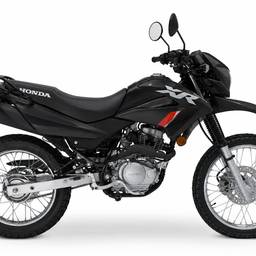
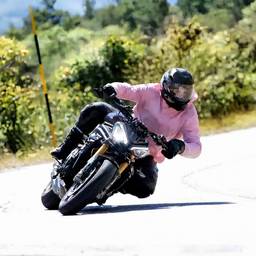
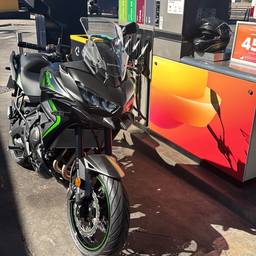
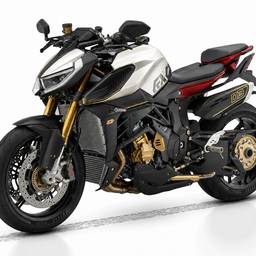
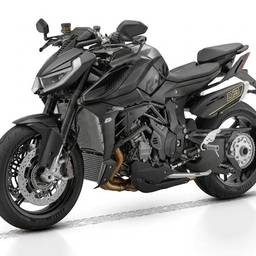
Take the black motorcycle from the first image and composite it into the workshop scene from the second image. Place it where the scooter was, naturally scaled and positioned. Both front and rear tires must be completely flat/deflated — visibly compressed against the floor with realistic sidewall deformation and flattened contact patches. Do not change the motorcycle's body, shape, decals, colors, accessories, seat, wheels, rims, exhaust, handlebars, or any other original details. The motorcycle must look genuinely photographed inside the workshop. Preserve all environmental details from the second image: the exact workshop floor texture, stains, cracks, dirt, dust, uneven surfaces, floor perspective and lighting, natural shadows, contact shadows, reflections, surrounding tools, equipment, shelves, walls, doors, objects, and background details. Match the original camera perspective, lens characteristics, depth of field, exposure, and image quality. The motorcycle must physically interact with the floor with realistic weight, tire deformation, contact shadows, ambient occlusion, and matching reflections. Match lighting direction, color temperature, contrast, brightness, and shadows of the workshop scene precisely. No cutout or pasted look — edges must naturally blend with subtle shadows and lighting spill. Photorealistic compositing.
似た作品